
You are about to swap a token on a popular Ethereum-based protocol. The quote looks acceptable, the gas fee is visible, and the transaction appears routine. Yet between clicking “confirm” and the transaction being finalized, several things can change: the market can move, a sandwich attacker can react to your trade, or an approval can grant a contract more authority than you intended. The uncomfortable lesson is that signing a transaction is not the same as understanding its consequences.
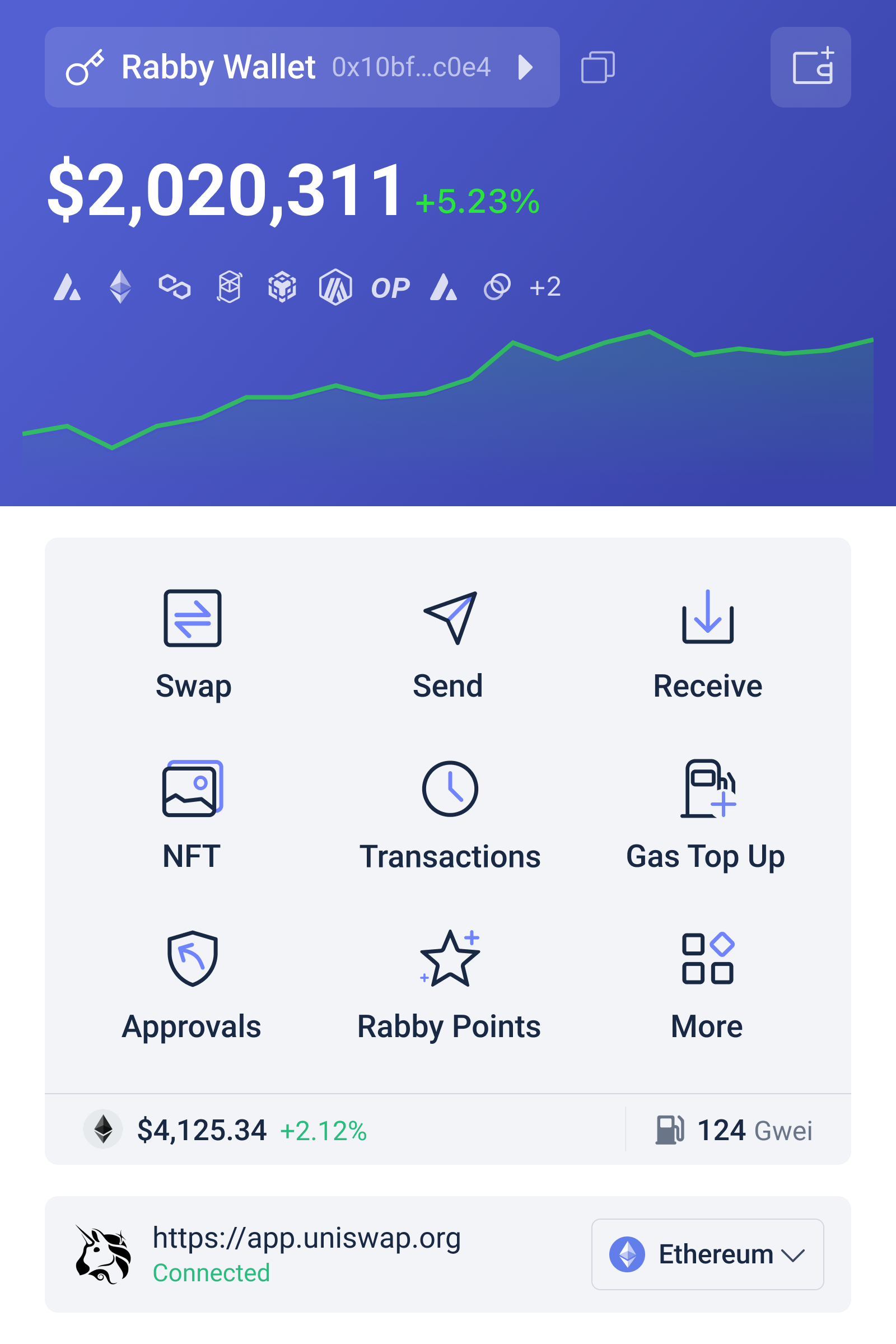
That is where transaction simulation and MEV-aware wallet design become more important than a polished interface. Rabby Wallet’s recent positioning as an Ethereum and EVM-focused wallet for activity across chains reflects a broader shift in Web3 security: the wallet is becoming an interpretation layer between opaque smart-contract code and the human decision to approve it. The useful question is not whether a wallet can promise perfect safety. It cannot. The useful question is how much uncertainty it can expose before money is at risk.
Why simulation matters before the signature
A blockchain transaction is usually presented to a user as a short request: approve, swap, supply, borrow, or mint. Underneath, it is a set of instructions sent to a smart contract. The wallet may know the destination address and the function being called, but the economic result depends on contract logic, token behavior, market liquidity, permissions, and the state of the blockchain at execution time.
Transaction simulation attempts to make that hidden result more concrete. A wallet can execute a proposed transaction against a representation of current chain state without broadcasting it. It may then estimate which assets will leave the wallet, which assets should arrive, whether an approval changes spending authority, and whether the call is likely to revert. This is more informative than merely displaying a contract address because it focuses on effects rather than labels.
The distinction is important. “You are interacting with a decentralized exchange” is a category. “Your wallet is expected to spend this amount of one token and receive approximately that amount of another, while a particular contract gains permission to spend your token” is a decision aid. The latter gives the user something they can compare with their intention.
For US-based DeFi users, this is especially relevant because a transaction can involve multiple chains, bridges, aggregators, and unfamiliar token contracts while still appearing in one browser session. A simulation can reduce cognitive load, but it does not remove the need for judgment. It is an estimate produced from a particular state, node, and interpretation of the transaction—not a guarantee of future execution.
MEV protection is a problem of timing and information
MEV, or maximal extractable value, describes value that block producers and other specialized actors can obtain by choosing, reordering, inserting, or excluding transactions. In practical terms, a trader may be exposed because the details of a pending transaction reveal an opportunity before the trade is finalized.
The familiar example is a sandwich attack. An attacker observes a large swap, buys before it executes, allows the victim’s trade to move the market, and sells afterward. The victim may still receive the expected transaction outcome within the permitted slippage range, but at a worse effective price. The attack is not necessarily a theft of the wallet’s private key. It is an exploitation of public transaction information, execution order, and market impact.
This explains a common misconception: transaction simulation and MEV protection solve related problems, but they are not the same control. Simulation asks, “What does this call appear likely to do?” MEV protection asks, “How can the transaction be submitted or structured so that adversarial ordering is less likely to harm it?” A wallet can provide excellent simulation and still leave a user exposed to public-mempool strategies. Conversely, private or protected submission can reduce visibility without telling the user that an approval or contract interaction is dangerous.
Effective risk management therefore has at least two layers. The first is semantic and economic interpretation: understand the intended effects, permissions, and slippage. The second is execution privacy and ordering: limit how easily observers can exploit the transaction before inclusion. Neither layer is sufficient on its own.
What a security-focused wallet can reveal—and what it cannot
An advanced wallet such as rabby wallet is most useful when it turns security review into a repeatable process rather than a one-time warning. Before signing, the user should be able to inspect the chain, destination, value, token movements, approvals, gas estimate, and any meaningful warning about the contract or expected outcome. This is particularly valuable when a DeFi application generates a call that looks familiar but contains unexpected parameters.
Simulation can flag a transaction that is likely to fail, which matters for more than convenience. A reverted transaction may still consume gas, and repeated failures can encourage users to “try again” without understanding the underlying cause. A simulation may also expose a mismatch between a user’s mental model and the contract’s behavior: for example, a supposed deposit that transfers a different asset, an approval that grants a broad allowance, or a swap whose estimated output is materially below expectation.
But the boundary conditions deserve equal attention. A simulation is only as good as the state it observes and the assumptions used to interpret the call. Blockchain state can change between simulation and inclusion. A contract can depend on block timestamp, price feeds, liquidity, oracle updates, or external calls. Malicious or unusual token contracts may behave differently in ways that are difficult for a general-purpose interface to summarize. A successful simulation also does not prove that a protocol is solvent, governed responsibly, or free from an exploitable bug.
There is another limitation that users often overlook: familiar-looking approval flows can create long-lived risk. A swap may complete successfully while leaving a token allowance in place. If the approved contract is later compromised, upgraded, or used incorrectly, the authorization can become an attack surface. A wallet warning is useful, but approval hygiene remains an operational responsibility. Users should treat broad, indefinite allowances differently from narrowly scoped permissions, especially when interacting with newer protocols.
A practical framework for reading a transaction review
Instead of asking whether a transaction is labeled “safe,” use four questions.
- Identity: Is this the intended network, contract, token, and application? A correct-looking website can still direct a wallet to an unexpected address.
- Effect: Which assets leave the wallet, which assets arrive, and what happens if the transaction is only partially understood? The net movement matters more than the function name.
- Authority: Does the transaction grant spending permission, ownership, operator rights, or another form of control? Permissions can outlast the immediate trade.
- Execution: Could slippage, ordering, liquidity, or a changing oracle make the actual result materially worse than the simulated result?
This framework also clarifies when MEV concerns deserve more weight. A small, liquid swap with conservative slippage may have limited exposure, although “limited” is not “zero.” A large trade in a thin pool, a volatile token, or a transaction with unusually generous slippage creates a more attractive target. In those cases, reducing public visibility, splitting execution, using a more liquid route, or delaying the trade may be more consequential than simply checking whether the call will revert.
The deeper insight is that wallet security is not binary. It is a chain of controls: correct website, correct network, understandable contract effects, bounded permissions, sensible slippage, and an execution path that does not unnecessarily advertise a valuable order. A weakness in any link can dominate the outcome.
Where convenience can become a new risk
Security tooling introduces its own trade-offs. A detailed warning system can overwhelm users with alerts, causing them to approve transactions mechanically. A clean simulation can create false confidence if users interpret it as an audit. Automatic routing or protection features may also involve infrastructure choices that users do not fully inspect, including reliance on remote nodes or third-party transaction services.
That does not make these features unhelpful. It means their role should be understood correctly. The best interface is not the one that claims to eliminate judgment; it is the one that makes judgment faster and better informed. Experienced users should still verify high-value transactions independently, test unfamiliar contracts with small amounts, separate long-term holdings from active DeFi funds, and review allowances periodically.
For developers and protocol teams, the implication is equally significant. If wallets increasingly display predicted asset movements and permission changes, contracts that produce confusing or surprising effects may face greater user resistance. Clear interfaces cannot repair unsafe protocol logic, but they can expose poor assumptions earlier. Over time, better transaction interpretation may shift competition away from headline features and toward verifiable behavior at the point of signing.
What to watch next
The next meaningful development is likely to be a closer connection between simulation, submission privacy, and permission management. If these controls remain separate, users may receive a reassuring execution preview while still broadcasting a trade vulnerable to ordering strategies. If they become integrated, the wallet could present a more complete risk picture: expected effects, likely price impact, permission duration, and the chosen transaction pathway.
That scenario would still have limits. No wallet can predict every contract state transition, guarantee a market price, or neutralize a compromised protocol. The strongest evidence of progress will therefore not be broad claims of safety, but practical reductions in ambiguity: fewer unexplained approvals, clearer asset-flow previews, more accurate failure explanations, and transparent disclosure of what protection does and does not cover.
Frequently asked questions
Does transaction simulation prevent MEV attacks?
No. Simulation estimates what a transaction may do before it is submitted. MEV protection concerns how the transaction is exposed, routed, ordered, and executed. Simulation can reveal excessive slippage or an unexpected outcome, but it does not by itself prevent a third party from reacting to a public transaction.
Can a successful simulation guarantee that a transaction is safe?
No. It can improve visibility into expected effects and detect some likely failures, but chain state can change and contracts can contain risks that a wallet cannot fully assess. A successful preview should be treated as evidence about the proposed execution, not as an audit of the protocol.
What should I check before signing a DeFi transaction?
Confirm the network and destination, inspect assets leaving and entering the wallet, review approvals and permissions, assess slippage and liquidity, and consider whether the transaction should use a protected submission path. For unfamiliar or high-value interactions, start with a small amount and review remaining allowances afterward.
The practical standard is modest but powerful: do not sign what you cannot explain. A wallet that simulates transactions and surfaces security risks can make that standard achievable at ordinary DeFi speed. Its value is not that it makes Web3 risk disappear. Its value is that it moves more of the important reasoning to the moment when the user can still choose not to proceed.